The Shade Bed Light Map
Find the light a shade bed really gets: hours of direct sun counted the way plant tags count them, a whole day of readings instead of one, the share of open light, where a tree's shadow lands by season, one tier per bed, and one trial plant before the rest
Our Canopy Cover Calculator measures how much of a bed sits under a crown, our Light Level Calculator turns a lux reading into a daily light integral, and our Shade Plant Selector sorts plants by partial, full and deep shade. But plant tags are written in hours of direct sun, not lux or canopy percent, and a single light reading describes the hour you took it, not the day the plant lives through. That translation is where most failed shade plantings start. The Shade Bed Light Map measures a bed in the tag's own unit first: one check an hour on a clear day, from the shadow on the ground. It logs a reading at each check beside the open lawn in the same minute, averages them into one whole-day figure, finds where a tree's noon shadow lands in each season, and gives each bed the darker of the two measured tiers for the leafed-out season. Then it buys one trial plant of each candidate before the rest. In the worked example, one July border reads anywhere from 1.2 (Deep shade) to 48.75 (Full sun) from a single reading, but 14.32 as a whole day; and a one-season trial puts $22.50 at risk instead of $735. Every figure is computed by the code our calculators run, and every worked number is an example for you to replace. It measures light for plants only, says nothing about sun protection for people, and leaves tree work to an arborist. Included: seven steps, four printable working pages (a sun log, a light log, a bed light card, a buy sheet), reference tables, a quickstart, and a personalised sheet worked from the numbers you entered in our calculators.
Look inside
Two full pages from the map, exactly as printed. Click either to read it at full size before you decide.
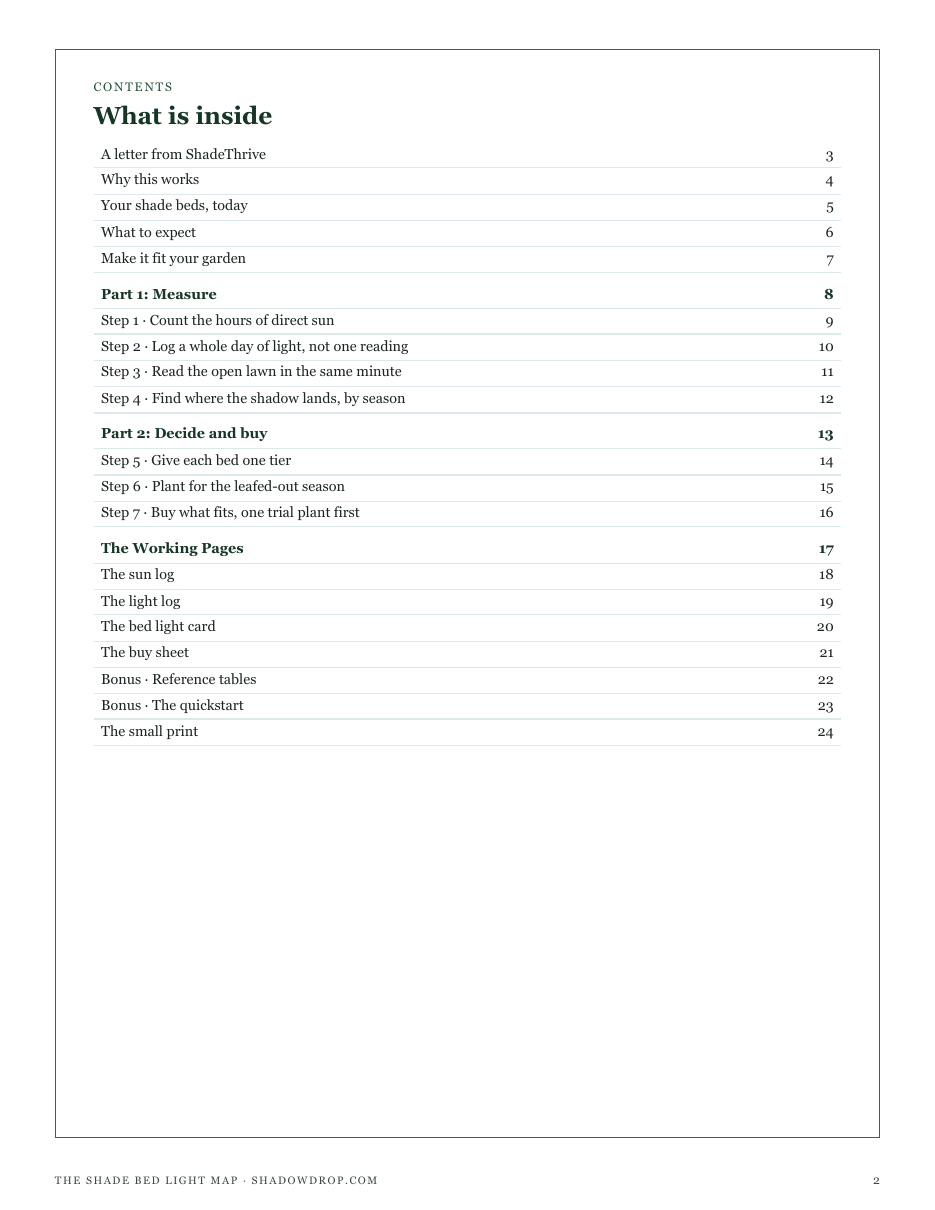
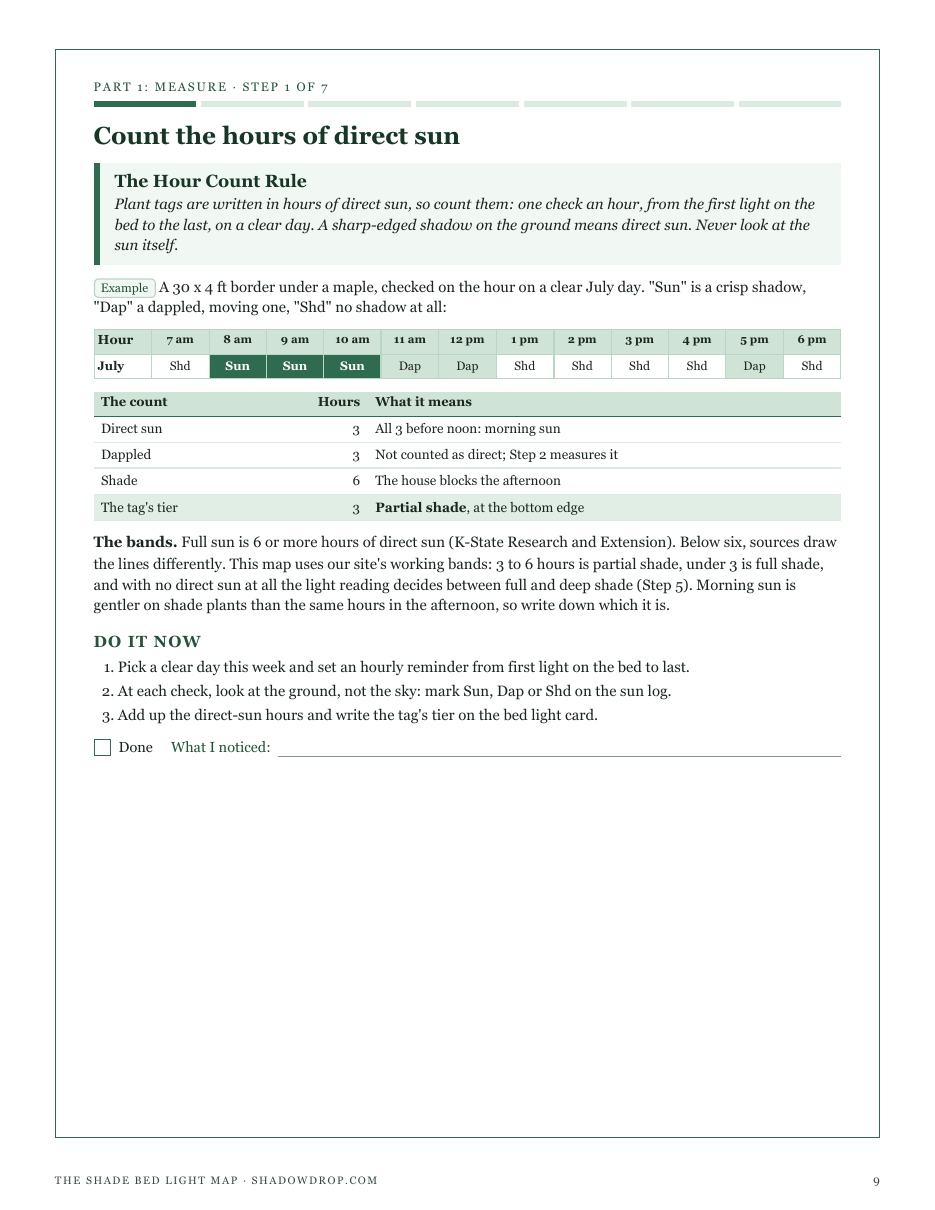
What is in it
- The Hour Count Rule: hours of direct sun counted the way plant tags count them, from the shadow on the ground
- The Whole-Day Rule: a reading every hour, averaged, instead of one reading multiplied by the day
- The Same-Minute Rule: the open lawn read beside the bed, for the bed's share of open light
- The Walking Shadow Rule: canopy overlap, tree height from a stick, and the noon shadow by season
- The Darker-Reading Rule: one tier per bed from the darker of the hours and the whole-day reading
- The Leafed-Out Rule: log before leaf-out and in midsummer, and plant for the darker season
- The One-Plant Trial Rule: one of each candidate for a season, then only as many as the bed holds
- Four printable working pages: sun log, light log, bed light card, buy sheet
- Reference tables: noon shadow per 10 ft of tree height by latitude and season, whole-day DLI by average reading and hours
- A quickstart checklist and a personalised sheet worked from your own calculator inputs
- ✓ 24 printable pages
- ✓ 10 sections, worksheets and templates
- ✓ A second PDF worked out from the numbers you enter
- ✓ No account needed, just an email address
- ✓ Instant download; link valid 7 days
Price includes any taxes. Sold by GrabURL, who handle checkout and support. The charge appears on your statement as GrabURL.
The map picks up where the free Canopy Cover Calculator leaves off. That calculator measures how much of a bed sits under a crown; the Light Level Calculator turns a lux reading into a daily light integral; the Shade Level Reference sorts plants by light tier; and the Shade Plant Selector and Plant Spacing Calculatorchoose and count the plants. The map carries them through: hours of direct sun counted the way plant tags count them, a whole day of readings instead of one, the bed's share of open light, where the tree's noon shadow lands by season, one tier per bed from the darker reading, and one trial plant of each candidate before the rest. Every figure in it is an example for you to replace. It measures light for plants only, not sun protection for people.